In this set, students will listen to the radio station Radio Bilingüe, one of three pioneering Spanish-language radio stations, and focus on the diverse issues related to Latinas. Specifically, they will explore a program series titled Línea Abierta, which covers topics such as health, politics, education, immigrant rights, and more. They may need to listen to the episodes more than once.
Línea Abierta is a groundbreaking daily talk show that connects Spanish-speaking audiences across the United States and Mexico. Created by Radio Bilingüe in February 1995, the program provides thoughtful, in-depth coverage of issues affecting Latino communities—something rarely found in mainstream public or commercial broadcasts. The hosts of Línea Abierta, Chelis López, Gerardo Guzmán and Samuel Orozco, first started delivering a full hour of news, analysis, interviews, special series, and roundtable discussions in Spanish. In August 1996, the program was expanded to a two-hour format. The show regularly brings together Latino and Latina experts for dynamic, moderated conversations. Línea Abierta is now broadcast on 75 stations nationwide and is offered free of charge via satellite and online at radiobilingue.org (De La Cruz, 2017).
In 2025, Línea Abierta celebrates 30 years on the air with a special edition show titled Thirty Years, Thirty Voices, featuring 30 civil rights leaders, activists, and influential figures such as Dolores Huerta and José Ángel Gutiérrez (De La Cruz, 2017; Radio Bilingüe).
Before engaging with this resource set, students are encouraged to explore the following:
- The social injustices that Latinas face in your city and state.
- The accomplishments and contributions of Latinas in your city and state.
- The Latinas each student admires, whether a family member, a community activist, artist, or someone else.
- What organizations work to promote equity for Latinas in your city and state?
Essential Question
What groundbreaking contributions have Latinas made in fields such as music, social movements, the economy, national organizations, and more? What content surprised you the most?
General Discussion Questions
- What are the main topics discussed in Línea Abierta?
- How does each topic impact Latinas and the Latino community?
- What organizations, movements, and activists have contributed significantly to advancing equity for Latinas?
Classroom Activities
Activity 1. Mariachi Mujer 2000
In the below radio program recorded in 2001, the host interviews Laura Sobrino and Griselda Pérez, who are part of an all-female mariachi ensemble. The group is also led and directed by women, with members from various cities across California. The interview focuses on highlighting the different challenges they have encountered.
Divide students into five groups and assign each group a specific section of the podcast to analyze and summarize the main takeaways. They must write their main takeaways. Once all groups have completed their section, ask them to present their findings to their classmates.
Group one: Listen from minute 8:47 to 15:53, where Laura and Griselda discuss which instruments women were allowed to play and how they formed the mariachi ensemble. What challenges did the group face, and how did they resolve them? What key differences set this mariachi ensemble apart from other mariachi groups?
Group two: Listen from minute 15:53 to 19:00, where Laura Sobrino, an ethnomusicologist, shares how she discovered her love for Mexican music. How did Mexican music help her connect to her identity, culture, and language? What obstacles did she encounter in maintaining her Spanish?
Group three: Listen from minute 19:00 to 27:28. What does Griselda Pérez, a guitarist and new mother, at the time of the recording, share about her musical journey and what motivated her to join? How does her experience differ from Laura’s? During this segment, Laura also discusses the main changes she has witnessed in her 26 years of experience in mariachi. What are those key differences?
Group four: Listen from minute 27:29 to 34:16. Laura and Griselda further discuss the outcomes and differences of having a female-led mariachi, from its musicians to its directors. What do they say about these differences and their impact?
Group five: Listen from minute 43:50 to 58:40, where Laura Sobrino shares the history of women in mariachi. Who are the people and mariachi ensembles she mentions? In what years did they perform? What final message do Laura and Griselda share with young women interested in playing in a mariachi?
Activity 2. Latina Leadership, Activism, and Social Change
In this activity, for homework, students will choose one of the radio programs listed below that discusses female accomplishments, contributions, and social justice struggles over the years. They will then select five images that represent the podcast’s main takeaways. In class, students will present their images and explain why they chose them and how each one represents the content of the podcast.
Listen to the host interview Chicana leaders Olga Talamante and Elizabeth “Betita” Martínez.
Listen to the host interview domestic violence activist María Hernández and Andrea Cristina Mercado. María is the domestic violence program coordinator at Mujeres Unidas y Activistas. Cristina is the campaign director of the National Domestic Workers Alliance. [Disclaimer: This podcast includes discussions on sensitive topics, such as domestic violence. Listener discretion is advised.]
Listen to the host interview a young, newly elected Latina councilmember, Dulce Gutiérrez, who became one of the first Latinas to win in Yakima, Washington. She was elected with 85% of the votes.
Listen to the host, Samuel Orozco, interview activists and leaders who organized a one-day strike for women, A Day Without a Woman, on International Women’s Day. These activists and leaders include Dolores Huerta, Marcela Romero Rivera, and Nestora Salgado.
Activity 3. Indigenous Women Leadership and Binational Organizing
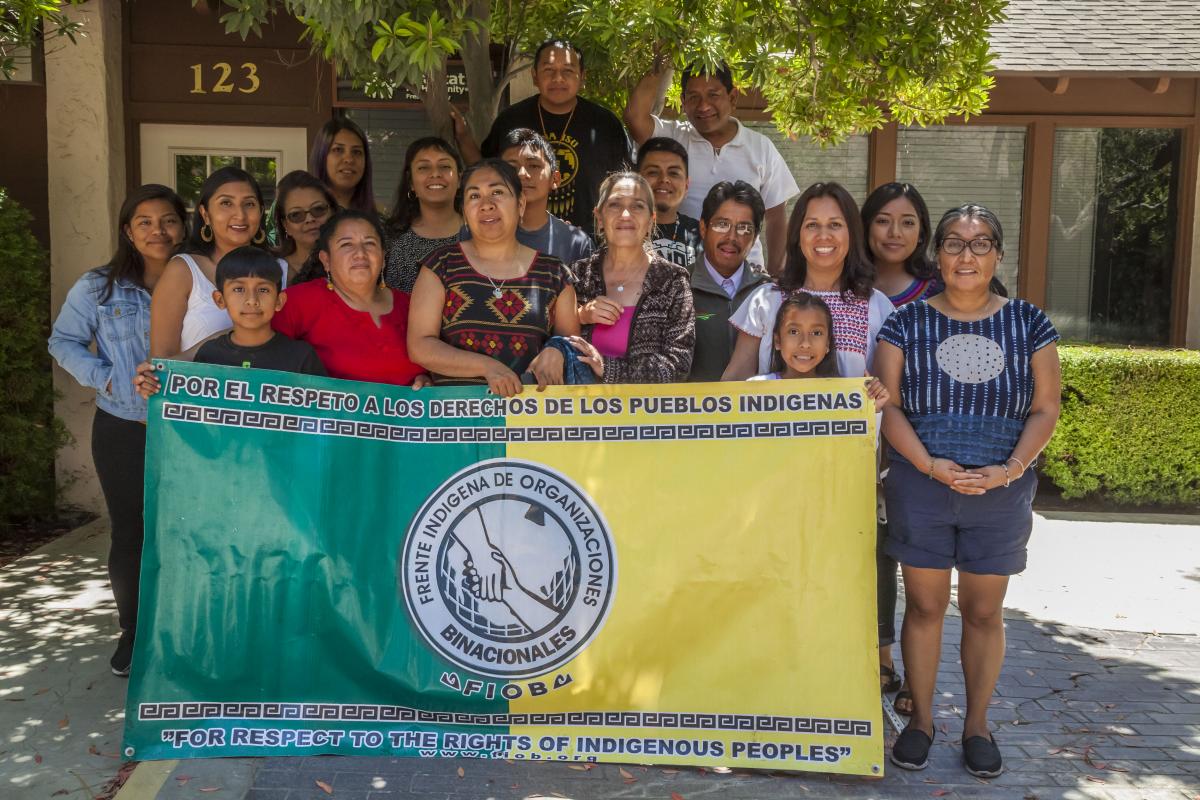
In this activity, students will learn about the Frente Indígena de Organizaciones Binacionales (Indigenous Front of Binational Organizations), an organization that serves Latino-Indigenous migrant and non-migrant communities and individuals in California and various states in Mexico. Frente Indígena de Organizaciones Binacionales will be led by indigenous women. In the below podcast clip, the host, Samuel Orozco, interviews the newly elected leaders Odilia Romero and Oralia Maceda.
Students will listen to the clip and then answer comprehension questions from A to G. Then, students will be divided into groups of four to discuss their answers.
- A. What are the objectives and goals of the organization Frente Indígena de Organizaciones Binacionales?
- B. What makes this organization unique?
- C. Odilia mentioned that she is in her elected position because her female colleagues have done “el trabajo de hormiga.” What is she referring to here?
- D. Who is Marichuy (María de Jesús Patricio Martínez), and what did she do?
- E. What challenges and social injustices do Indigenous women encounter?
- F. What do Odilia Romero and Oralia Maceda plan to do as newly elected officers in the organization, and what roles do they plan to challenge?
- G. What challenges do they face during local, state, and national elections in the U.S. and in Mexico?
As a group, discuss the advantages of having Indigenous women lead an organization like Frente Indígena de Organizaciones Binacionales.
Activity 4. Latina Labor, Leadership, and Economic Justice
As stated in the introduction, between 2010 and 2021, Latinas’ economic contribution grew by 51%. This growth is due, in part, to financial literacy opportunities for Latinas, such as La Cumbre conference and advocacy efforts like Latina Equal Pay Day. These initiatives are crucial in reducing the pay gap for Latinas. According to a U.S. Senate report (2023), “Latinas are paid just 57 cents for every dollar paid to White, non-Hispanic men, and Latinas will not achieve equal pay at the current rate for another 432 years” (p.748).
In this activity, students will complete three parts:
Part I.
Students will be divided into pairs and listen to a clip from the episode titled Latina Entrepreneurs recorded in 2019. They will then discuss the meaning of the following quotes from the interview in the context of the episode’s content.
“En este lugar, me van a cuidar aquí y yo voy a cuidar a los otros.”
“Hay tanto mensaje opresor que el mismo oprimido se la cree... En realidad el poder existe cuando el oprimido da ese poder, pero cuando nos damos cuenta que hay un poder colectivo y hay un poder interior, entonces nadie nos para… Juntas somos imparables.”
“Esta magia se crea cuando uno se atreve a mirarse, se atreve a escucharse a sí misma y a la otra persona… Nosotros, como Prospera, sabemos que no proveemos poder, solamente reconocemos el poder de las mismas mujeres. Nos acompañamos y nos decimos: ‘Órale manita, aquí podemos y aquí la hacemos.’”
“La familia Prospera es muy rica… Las mujeres del programa son las embajadoras; las mujeres son las que estaban creando ideas para hacer el outreach. Entonces, sí, somos cinco, pero somos más, y esa es parte de la riqueza… Estamos en el proceso de desaprender y decir: ‘Somos muy ricos, tenemos unos programas riquísimos.’”
“Hay un camino para las mujeres aquí en Prospera; no es así de: ‘vengo, tomo mi curso y me voy,’ sino de ‘tomo un curso y sigo, sigo, sigo y sigo avanzando, me quedo y me apropio de la organización.’”
“Una vez que tú prosperas, impactas a toda la gente, a tu familia y a tu comunidad.”
Part II.
Students will listen to the next part of the podcast Latina Entrepreneurs.
In this section, students will hear testimonies from women about how Prospera has changed their lives, as well as an interview with one of the keynote speakers at the conference, La Cumbre. Each student will need to choose one of the women’s testimonies below and write a short summary.
- Anahi Rojas
- Sonia Ordoñez
- Concha Saucedo-Martínez
Part III.
Divide students into groups of three and ask them to listen to the below broadcast, where the host Chelis López interviews activists Claudia Tristan (immigrant campaign director of Moms Rising) and Mónica Ramírez (founder and president of Justice For Migrant Women) about Latina Equal Pay Day.
Each group must fill out the following details about Latina Equal Pay Day.
Details of Latina Equal Pay Day
- What injustices have Latinas faced regarding their pay, and how has it affected them, their families, and communities?
- Why is Latina Equal Pay Day important?
- What have Latinas and organizations done to fight for equal pay for Latinas?
- What can Latinas do to find out if they are being paid less than their colleagues?
- What groups of Latinas are the most affected by not receiving equal pay? Explain your answer: why are they the most affected?
Discuss the answers as a class and write the main ideas for each question on the board. Then, as a class, discuss what you and your local community can do to fight for and demand equal pay for Latinas. Are policies enough? Is this an issue that affects only women and should only be fought by women? Explain your answers.
 Mariachi Mujer 2000 (2001)


