Kameny: Elaine Noble is an Instructor of Speech at Emerson College in Boston. She is a member of the Daughters of Bilitis, a national lesbian organization working for the rights of lesbian women. She is also a member of the National Organization for Women. Ms. Noble, as a homosexual, are you content and happy with your homosexuality? Noble: Very much so. Kameny: Is it correct, then, to say that if it were somehow possible to relive your life, you would not wish to have become a heterosexual. Noble: Good heavens, no. I really couldn't say that at all. Kameny: You find your homosexuality a source of satisfaction and happiness. Noble: Very much so. I don't see it as anything that degrades or takes away. I see it as a very valid and very fulfilling lifestyle. Kameny: As a homosexual, what do you see as the legal advantages of legalized homosexual marriages? Noble: I think that there are several, not to mention the joint income tax kind of thing that a couple may enjoy. There may very well be some benefits in terms of, morbid as they sound, there may be benefits in terms of a couple sharing some social security benefits after one is deceased. There are several legal kinds of options that heterosexual couples have that should be extended to homosexual couples.
Kameny: Now, are there also personal advantages as well, and can you tell us what you see those to be? Noble: Well, I think that's really the question in terms of the personal advantages. I think whether your relationship be heterosexual or homosexual that there are stresses and strains in a relationship, and it seems among my colleagues who study heterosexual couples that the whole concept of marriage seems to strengthen the relationship and maintain the relationship during these periods of stress and anxiety, and if it seems to help heterosexual couples, then it should be extended to homosexual couples. I think that the real crux of the matter comes in terms of people coming out, such as in my own case. I can't very well ask my lover to come on a show like this with me because of family and sort of society's pressures. Now, if homosexual marriages were legalized, I think that both of us and many people, perhaps, in the audience tonight would be able to participate in the community in a very full and complete way, if we felt that the law was on our side. At the present time we don't feel it is. I think that in terms of shaping people's attitudes, making them change their minds and view homosexual relationships as a valid life style is probably the far more, and more valid, reaching part of that question. Kameny: It's said that homosexual relationships are notoriously unstable. Is this true?
Noble: Well, given the fact that I think the current heterosexual divorce rate is up to 40%, I think maybe the stereotype is perhaps misplaced. And given the fact of many of the homosexual couples, lesbian couples, that I know of that have long-lasting relationships for ten or twenty years without societal sanctions, I think that that is probably the more apparent and the more valid and strong reason for realizing that homosexual relationships can be as fulfilling and as nurturing as heterosexual relationships. Absolutely. Atkins: Miss Noble, I'm going to have to interrupt right now to say that it's time for us to recognize Mr. Simon. Thank you very much. Dr. Kameny. Mr. Simon, your witness. Simon: Miss Noble, if indeed you are so content and happy with your romance, aren't you a little bit afraid of taking a chance on ruining it by getting married?
Noble: Mr. Simon, are you speaking for me or for yourself, sir? Simon: I'm asking you ... I'm asking you quite simply if you feel that the marriage relationship has such a stabilizing effect, how can you point to the 40% divorce rate in the heterosexual marriage and then say that it will help the homosexual become more stable? Noble: Well, you see, that's a very good question. I think what we have to do is then define what we call marriage, and what I call marriage is having a very…the essence to me of marriage is having a very loving, supporting, and nurturing relationship. And perhaps heterosexuals, in terms of that divorce rate, it seems to me that from what I've read, the 40% who do get divorced again remarried, and those marriages seemed stable. But I'm defining marriage perhaps in a different way. It might be interesting to share your definition of marriage with us. Perhaps we're viewing it differently. Simon: Well, I wanted to ask you some questions about the incidence of marriage because it seems to me that marriage is designed primarily for the heterosexual couple and is inappropriate for the homosexual couple. I would like to ask you whether you plan to modify or change the marriage relationship. For example, in the homosexual marriage, will there be an identifiable head of the family?
Noble: Well, I think that's probably ... I think that's sort of a dated question, don't you think . . . I assumed . . . Simon: I take it that you don't want to answer my question . . .
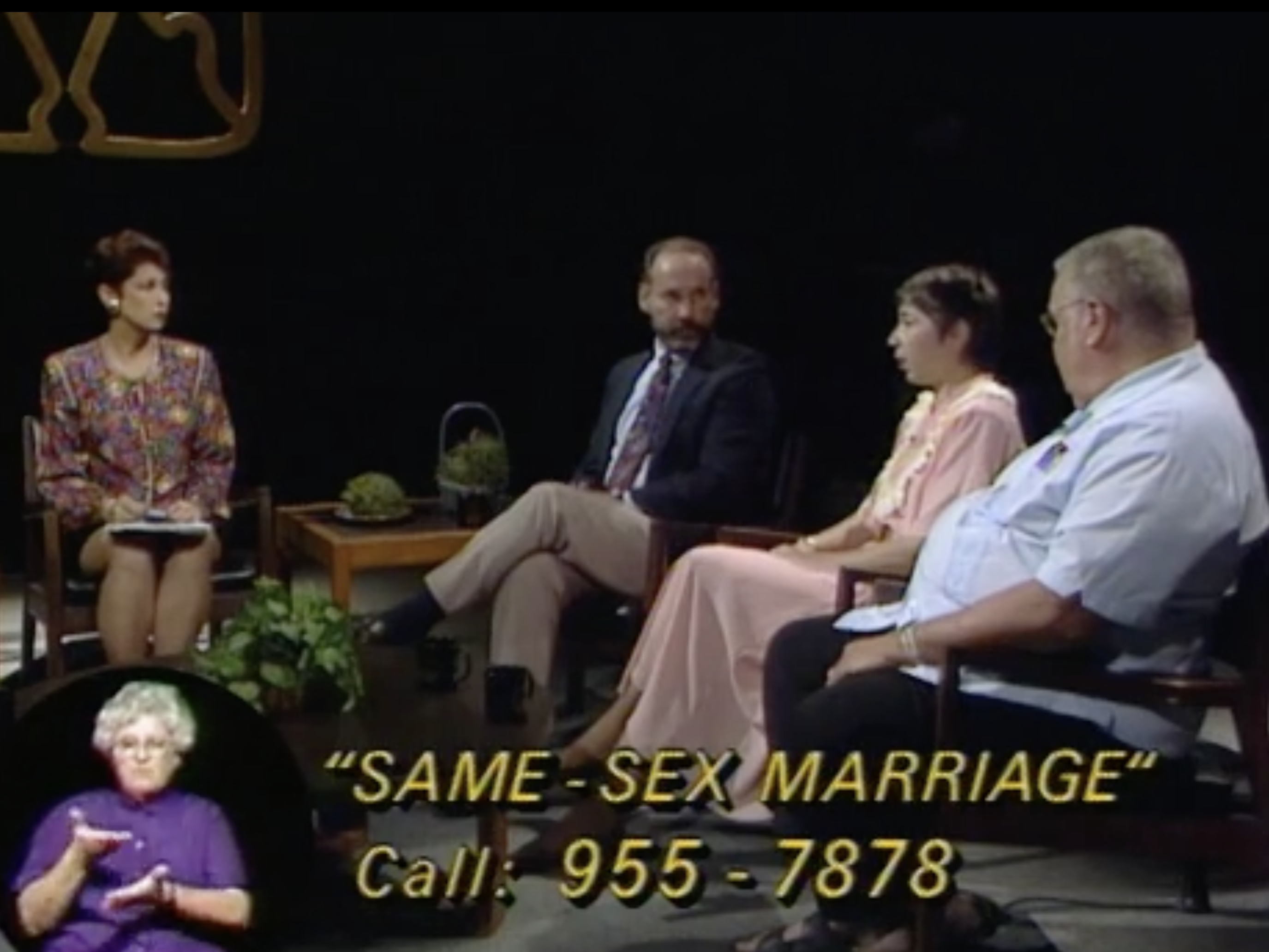 Two Reverends Give Competing Views of Christianity and Marriage (1994)
 Hawaii Court Decision Puts Marriage Equality in the National Spotlight (1996)
 Same-Sex Couples Sue for Marriage Equality in Massachusetts (2003)
 Massachusetts Ruling Shakes Up Marriage Equality Debate (2004)
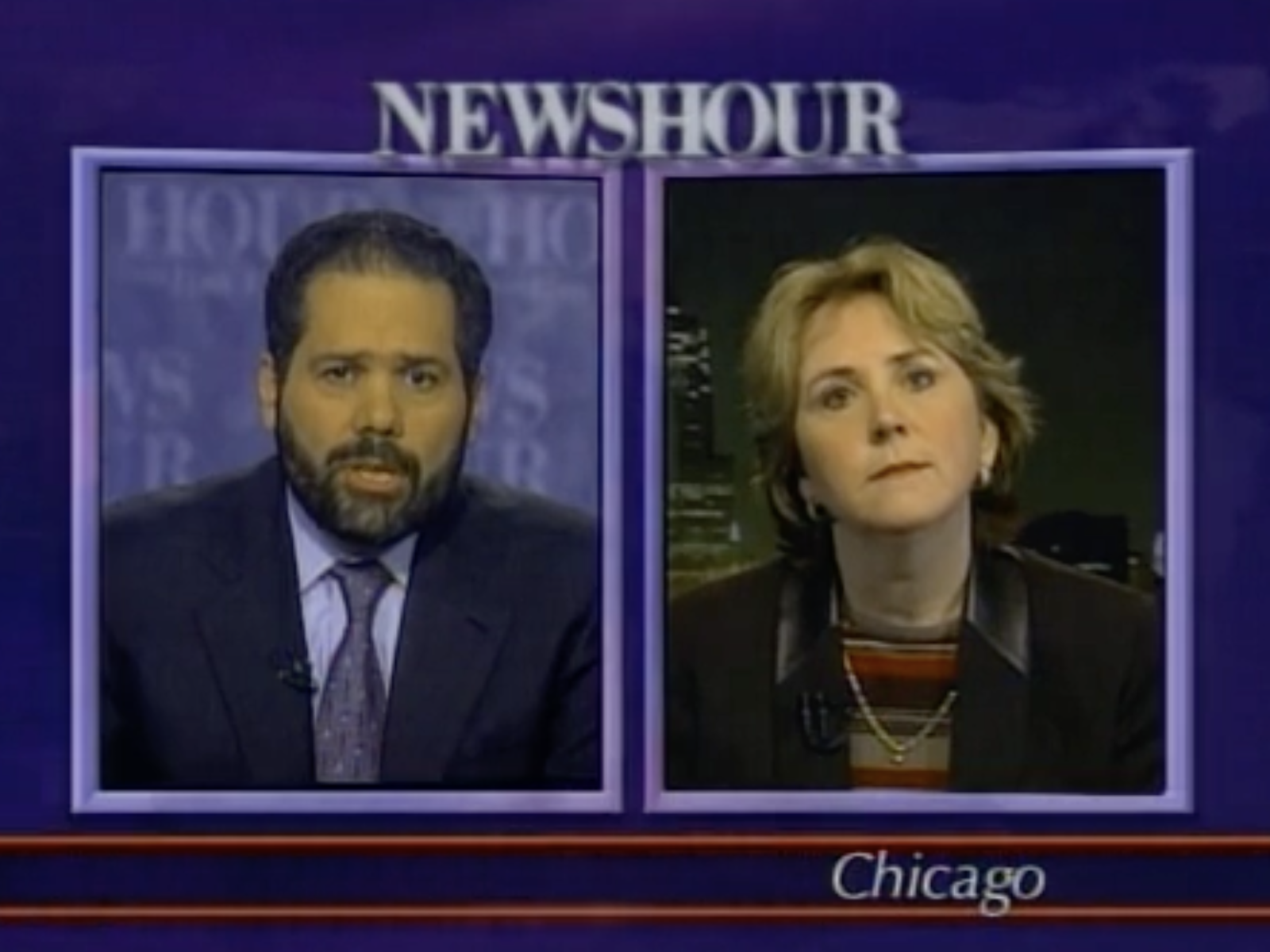 Dueling Advocates Make Mainstream Appeals on Marriage Equality (2004)
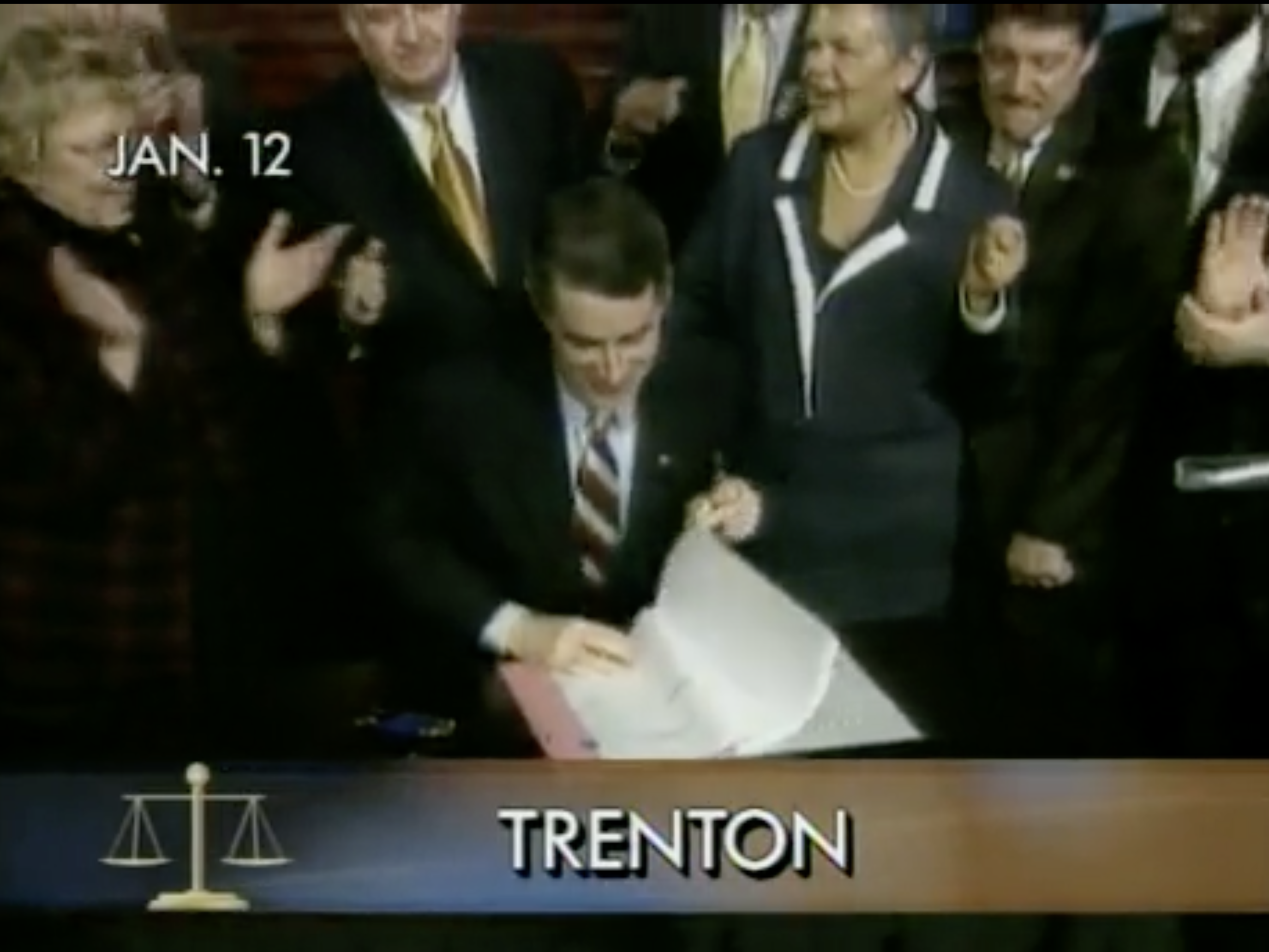 Same-Sex Couples Sue for Marriage Rights in New Jersey (2004)
 Political Mobilization Against Marriage Equality in the 2004 Election (2004)
 Two Lawyers Make the Legal Case for Marriage Equality (2010)
 President Obama Comes Out in Favor of Marriage Equality (2012)