These sets of videos and recordings document the injustices migrant farmworkers have faced throughout the United States. These sets will expose students to injustices such as low wages, unsafe and poor living conditions, and hazardous working conditions. Students will also learn about the resiliency and the birth of the farmworker movement.
Before engaging with this resource set, students are encouraged to explore the following:
- The crops that are harvested in your city and state (e.g., Florida oranges; Washington apples)
- The percentage of migrant farmworkers in your city and state
- The history of migrant farmworkers in your city and state
Essential Question
What are the injustices that migrant farmworkers have and continue to face in the United States, and what actions have these essential workers taken to fight against the violations of their human rights?
General Discussion Questions
- What is the Bracero Program, and how did it affect the U.S. labor force and economy?
- Who participated in the Bracero Program and what were the advantages and disadvantages of this program for participants?
- Migrant farmworkers routinely face injustice. What part did the Bracero Program play in this?
Classroom Activities
Activity 1. The Bracero Program: History and Contributions
Divide students into four groups and ask them to watch the source below. You can either assign the video for homework or watch it in the classroom. It is 28 minutes long, but students might need to watch it multiple times.
Each group should answer the set of questions assigned to them. After discussing their responses within their original groups, students will reorganize into new groups containing one representative from Groups 1, 2, 3, and 4. In these new groups, each student will share the answers and insights from their original group’s questions.
Group 1
a) Why were the farmworkers called “braceros?” What was the purpose of creating the Bracero Program?
b) Who participated in the Bracero Program? Why were the men selected (what were the required physical characteristics) to participate in the program?
c) What types of jobs did they do?
d) How were Mexicans informed about the program and what was the process to apply?
e) Why did Mexicans decide to apply to the program?
Group 2
a) Who is Cris Luna? Why did he join the Bracero Program?
b) How did most of the contracted braceros enter the United States?
c) Who is José Ramírez Delgado? What type of work did he do?
d) What happened in the Rio Vista Center?
e) Who is Minerva Cheatum? What was her job and how does she describe her job?
Group 3
a) Who is Lucio Apodaca?
b) Why was eastern Texas the worst location to work as a bracero?
c) Who is Isidro Peña?
d) Why did most of the braceros spend more time in California?
e) What does Octavio Camarena say about the physical demands on farmworkers?
Group 4
a) What differences did the braceros in Yakima encounter compared to the braceros in the Southwest?
b) What sacrifices did the families of the braceros face?
c) Who is Gloria Macía Rodríguez? What advice did her father give her?
d) Why does the video say that the braceros fed the U.S. during World War II?
e) What does the video say about the campaign for recognition?
Activity 2. “Water for Plants, Not for People:” Injustices Migrant Farmworkers Face
In the previous activity, we learned about the Bracero Program. At the end of the previous video, we saw that some farmworkers were starting to bring their families to the United States. In this activity, we will watch a recording that focuses on the struggles farmworkers’ families encountered, living in colonias (neighborhoods) in Texas.
Ask students to watch the below video at home.
Have students choose one of the following three topics. They must write detailed bullet points for the topic they choose. In class, tape three poster board sheets around the classroom. Students will be divided based on the topic they chose. They must complete the following three steps in their group. Step 1: Discuss the answers every member wrote for the topic. Step 2: Choose the best answers and write them on the poster. Step 3: Share your answers with the rest of the class.
Topic One: Do Not Have Clean Water
- Who didn’t have clean water?
- Where do they live?
- Where do they get clean water from?
- What happened in these communities?
- When did this situation happen?
- Why do these communities not have clean water?
- Who did have clean water, and why?
Topic Two: Write the Outcomes of Not Having Clean Water for Each Condition
- Health conditions
- Living conditions
- What are other outcomes that result from not having clean water?
- What daily routines would you need to change if you or your family did not have clean water?
Topic Three: Fight to Get Clean Water
- What is the valle de lágrimas (Valley of Tears), and why was it called that?
- Why did the valley become the new Miami? Why is water essential for these communities living in the Rio Grande Valley?
- Why did the communities decide to live in the colonias, and what obstacles did they face?
- What is the worst contaminant of water? Explain.
Follow-up Discussion for all students
- What did the communities in the colonias do to fight for clean water?
- At the end of the video, Dr. Ramiro Cazo states, “Everybody should have the right to a clean glass of water…every person should have available to him clean drinking water.” What do you think about this quote? Do you agree? Why or why not?
- What is the irony that the narrator of the video mentions about the situation of clean water? Why is it important to bring to light this human rights violation? (“Water for plants, not for people”)
Activity 3. The Resistance of the Migrant Farmworkers: “¡Huelga!”
In the previous activities, we discussed the history of migrant farmworkers in the United States and the poor living conditions they faced in the Rio Grande Valley. In this activity, we will explore the birth of the farmworker movement in Delano, California, in 1965 with a huelga (strike) to demand better salaries, working conditions, job security, and justice.
Students will watch the below documentary.
Students will be divided into small groups and will create a mind map (a visual and collaborative note-taking technique) about the main topics of the documentary. Students will be provided a poster board sheet and markers of different colors. Each group will draw a circle in the middle of the sheet and write the central topics of the video: the strike of the farmworkers and the creation of the National Farm Workers Association (NFWA, later known as the United Farm Workers of America). Then, students will branch out and write subtopics and details related to each topic (see examples on the link provided above about creating a mind map). Students should consider the following questions when creating the mind map:
- Why did the farmworkers decide to strike and create a union (the NFWA)?
- Who participated in the strike? Who were the leaders of the NFWA?
- When and where did the strike start and how long did it last?
- What actions did they take to launch the strike and demand for the rights of farmworkers?
- What obstacles did the organizers face during the strike?
- What impact did the strike have?
Once students complete the mind map, all groups will participate in a gallery walk. Students will gather in front of each group’s mind map and rotate to others. Each group will share two takeaways from the answers to the six questions above and will also share one thing they want to learn more about. Every group must share something new. The audience (classmates who are not presenting) must ask at least one question about the information shared during the group’s presentation.
Final Collage Reflection
In this set, we have learned about the history of the farmworkers, the obstacles they have faced throughout the years, and their resiliency in fighting for their human rights with the creation of the NFWA. In this activity, you will reflect on what you have learned about these topics and create a collage that represents at least four takeaways from this set. You can take screenshots from the videos you watched in these activities and include the photos in your collage. Once you have visual representations of the four takeaways, include phrases that summarize each takeaway. For instance, if one takeaway is “The braceros fed the U.S. during WWII,” you can take a screenshot from one of the videos in this set showing farmworkers in the fields. Students will share their final collage reflections with a peer in class.
Final Discussion
At the beginning of this set, you were asked to reflect on the crops harvested in your city and state, the percentage of farmworkers in your communities, and the history of farmworkers in your area. Discuss as a class whether you think farmworkers in your community still face the same injustices we learned about in Activity Two. Share what new injustices and obstacles that you think farmworkers might be facing now. If you are unfamiliar with more recent injustices farmworkers face, you can listen to the Línea Abierta podcast episode:
Lastly, brainstorm actions you can take to inform others about the contributions farmworkers have made to the U.S. and the injustices they have faced throughout the years.
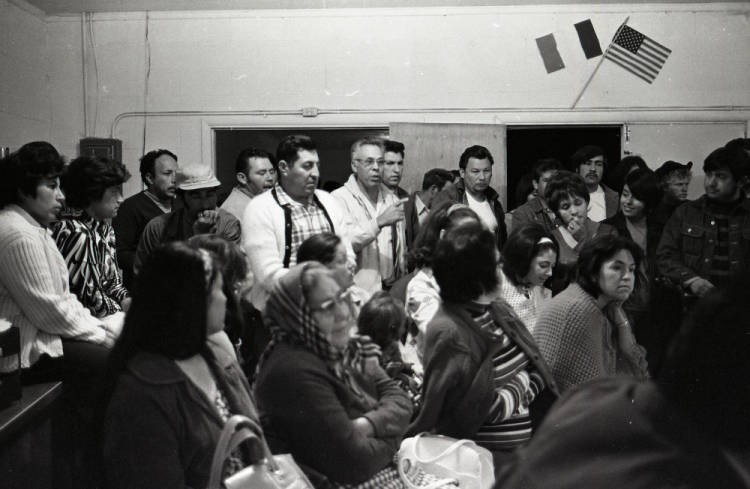
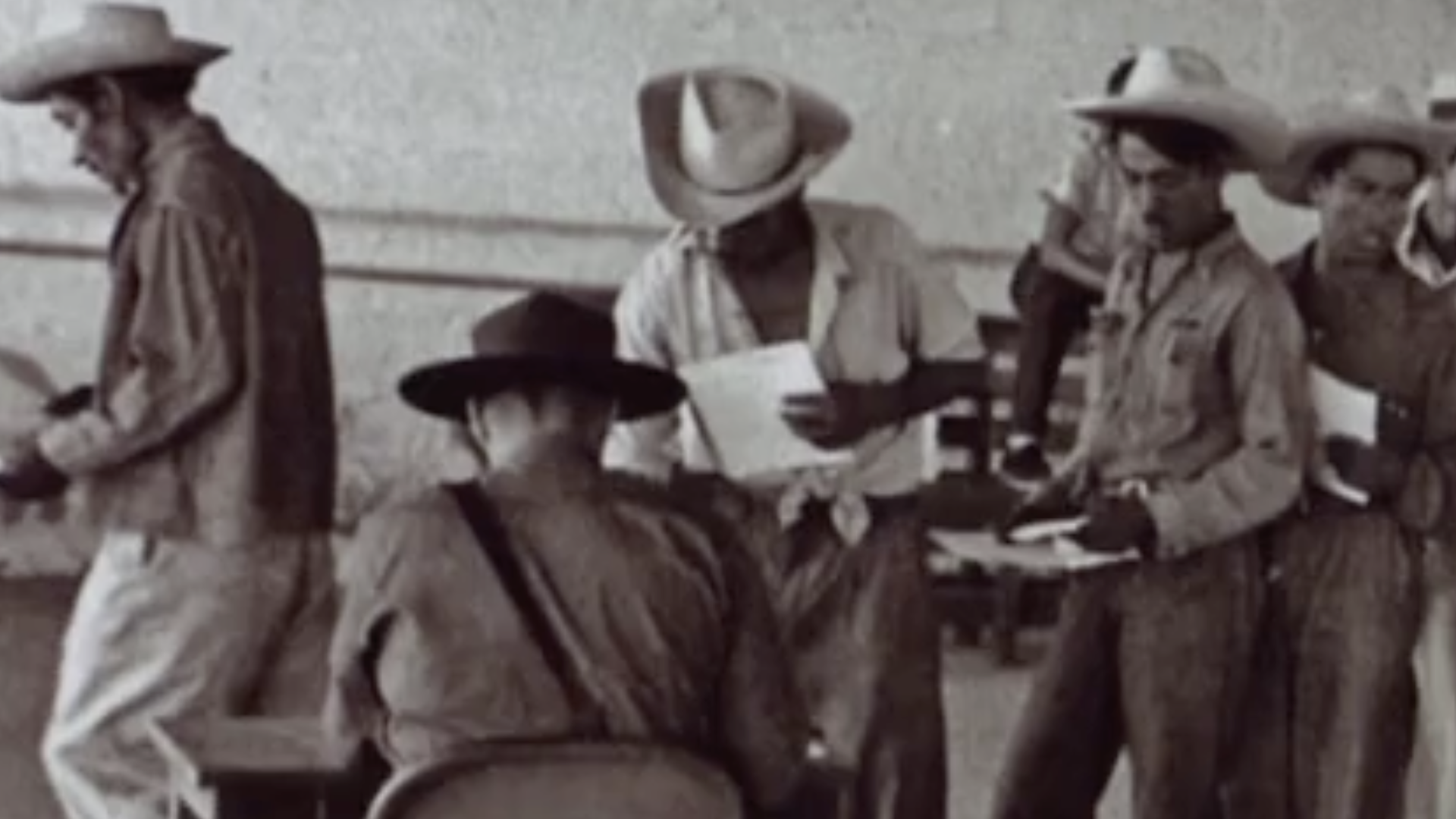 Viewfinder: Los Braceros: Strong Arms to Aid the USA (2006)
 A Thirst in the Garden (1976)
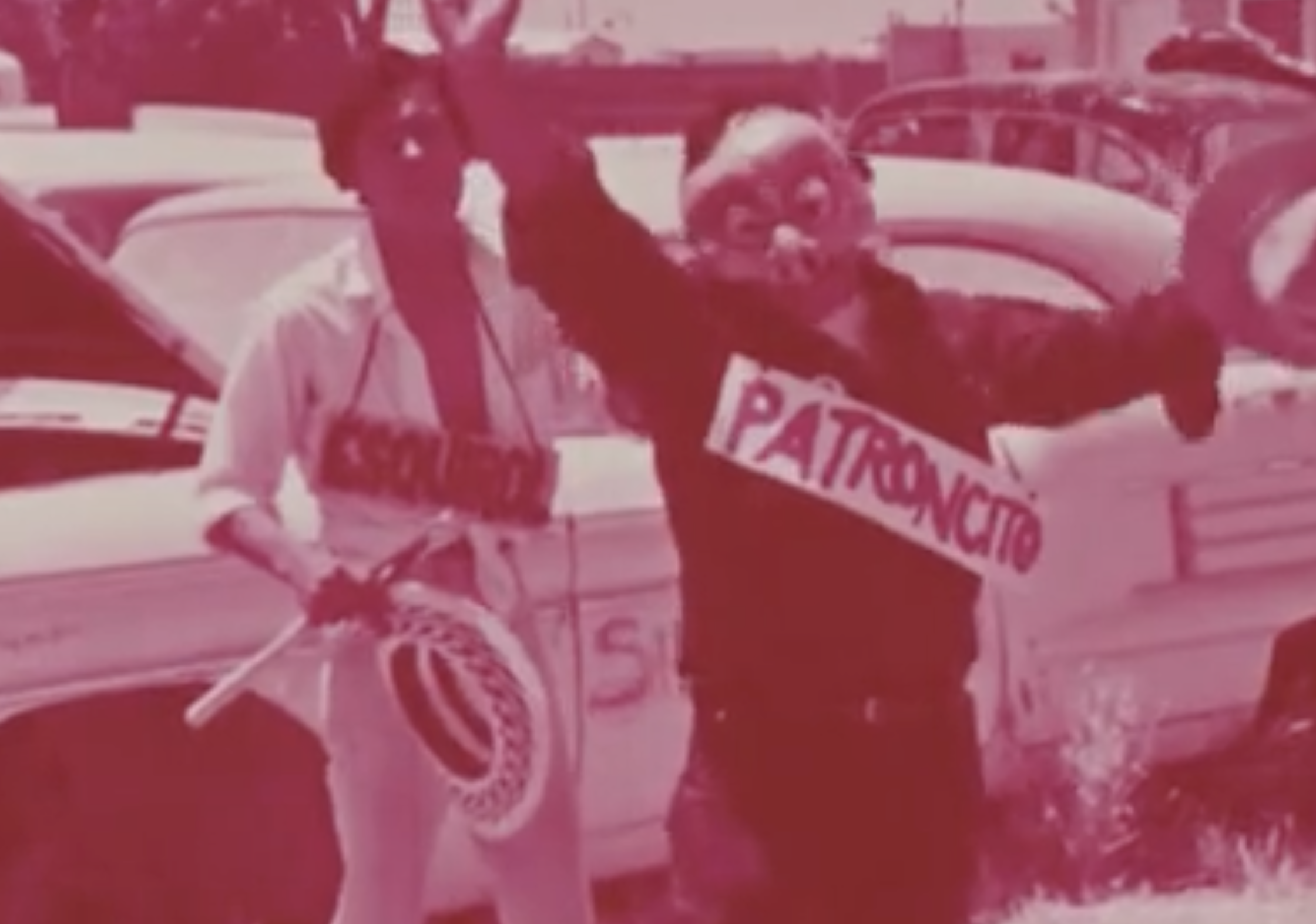 Hulega! (1968)
 Línea Abierta: Farmworker Rights: A Forum (2018)


