Interviewer: SURE. Nelson: We'll get to him. Okay, good. The people that are best trained I think for the design of interactive systems are really movie makers. Now I saw that because I think of myself as a movie maker even though I've only made one movie. And because you are visualizing what will happen on a screen if the user does specific things. Again I use the term screen generically, it could be a, an audio surround, it could be a miasma hanging in the middle of a room, but you're visualizing something an interaction between some world and what the user is doing. And this is a very intricate interaction like making movie because when you make a movie, you may make a decision about the music or the sound which influences the way you're going to cut a certain scene which influences the way the script's going to come out. All the parts interact with one another. And so in designing the system you have to make all these decisions in concert and in parallel, whereas computer people tend to want to set down rules and make it simpler and clearer, set down guidelines, and that leads to extremely clunky systems of the kinds we see now. So the kinds of interactive systems I've been designing have been far more fluid, and far more well...when people see my designs, they say, "Oh my God," because it's not like anything they expected. When I was at Datapoint in 1981, they wanted me to design a suite of office software so I came up with a design for a text system that I'd discarded ten years previously. And they said, "Oh my God, this is too futuristic" and threw it out. At any rate so where this is going, the most influential stuff is going to be the video games. In other words I take, I take Pac-Man to be the prototype of the office systems of tomorrow, not these obtuse, tiresome word processors and outline processors and spreadsheets, but Pac-Man which has real interaction, immediate feedback, color and sound, and is self revealing as different aspects of the design become clear to the user. As distinct from things where you have to open the manual and tediously learn each feature. So when the generation that grew up on video games gets to it, well they are now, they're now beginning to program their own software and so that's why we're seeing more and more vivid and imaginative software out there in the marketplace. Okay, you asked me about Doug Engelbart. Interviewer: YOU WENT TO '67 CONFERENCE WHEN HE PRESENTED?
Nelson: No. Was it '67, I thought it was 68? ...I'm not sure. It's funny, I started designing text systems in the fall of 1960 and basically came up with the hypertext concept, and that word, and various data structure designs for it. Over the period 1960 to 1965 I did not hear of Douglas Engelbart until 1965, I remember the conversation, and I didn't meet him 'til I think it was '67 that I came out here and met with his group. And so I guess that was when I first held a mouse and said, "Of course, it's great." That was something I hadn't thought of, and it was absolutely much better than the light pen. And but we had a fundamental disagreement because Doug's stuff was all sequential, he had, everything was in one long... outline. And so you were starting sequentially and continuing sequentially with the objective of sequential documents. And this seemed to me to miss the point of the computer screen...because writing is really sequential, in my belief, because we have numbered pages and for no other reason. An author has to twist his or her brain to make a document fit into a sequential structure and now that we have screens and interaction, we don't need that sequential structure anymore, the writer need only create the, a presentation showing the user what the categories and things to be looked at are, and allow the user to make these jumps into that material -- that's the hypertext concept. And but I don't want to sound disrespectful of Engelbart. Engelbart is one of the great men of our time. Doug Engelbart has not only had a vision of a better world and work at screens for high-powered teams that has been, well that has influenced many people, but he has also had the courage and clarity of mind to go on and on and on against all odds. And and he's just done a wonderful job in inspiring the whole world, and what we see out there. What did he invent? He invented the mouse, he invented word processing, he invented outline processing, he invented multiple windows on a screen, he invented the text link -- he gives me equal credit for that but I'm not sure I deserve it. He is, he is and he is a saintly individual, so I think he is one of the great men of our time. Interviewer: JUST IN GENERAL KIND OF TRY TO MAKE AS MUCH EYE CONTACT AS YOU FEEL COMFORTABLE, YOU COME OFF BETTER THAT'S WHY I ASK. WHAT'S SPECIAL ABOUT A COMPUTER, WHY IS IT THAT IT'S ON THE ONE LEVEL SO SEDUCTIVE, PEOPLE WILL WRAP THEMSELVES AROUND A COMPUTER FOR HOURS, HOW IS IT DIFFERENT OTHER TOOLS?
Nelson: The word computer, let's start, let's start with the word computer. It's a misnomer, okay? John Von Neumann called it the all-purpose machine and even though today's computer designs are called Von Neumann machines, nevertheless we don't call them all-purpose machines, we call them computers because historically we just happened to use them first for numbers, they could have been used first for controlling moving signs like baseball scoreboards, in which case we wouldn't have thought of them as numerical, we would have thought of them as textural and graphical machines first and then recognized their numerical functions afterward. So it's a historical accident that they're called computers and this has mislead a lot of people. What they really are is all-purpose machines that can be turned to any purpose by instructing them, which doesn't mean saying "Now computer, you do this," it means thinking of a series of operations and a way of specifying those operations that will make the events occur that you want to occur, and that sounds so simple. And there's the seduction, there's the quagmire of the that pulls everybody in, quick -- what's...what are those puddles called that pull you in? Interviewer: QUICKSAND?
Nelson: Quicksand. And the quicksand of the computer is that you think it's going to be easy and you put your toe in, and you think it won't take much longer because all you wanted to do was this little bit and so obvious to you, it's so clear to you what you want this machine to do. And you think okay it'll just take a few steps...well it'll take a few steps more, there you are six years later and your workroom piled high with papers and printouts and you're gradually realizing what an enormous job you chose because you just had no idea at the outset. And that's how it is essentially with, that's how it's been in almost every branch of computing. You thought, we all thought that all these different were so much simpler because the concept came to our mind so readily and the execution took so long. This has been especially true in the project I started 30 years ago with my term paper at Harvard which was going to be a writer's console, I thought, which would later expand to a worldwide publishing system and in fact it still is. And we'll have the product out this year or next and so after 30 years this extremely intricate system which keeps track of all the different versions of the same fragments will be available. And what I thought I could do as a...as one individual for a term paper 30 years ago has taken dozens of very brilliant and well trained guys years to complete. Interviewer: ISN'T THAT THE LAYER OF THAT QUICKSAND ALSO A LOOKING GLASS? I MEAN DON'T YOU WHEN YOU DIP YOUR FOOT IN —
Nelson: Beautifully put, yeah I'll, I'll quote you. Yeah, the layer, the upper surface of that quagmire, that quicksand is really a looking glass because...there you are seeing yourself, the computer is a projected system, a Rorschach test, 'cause you look at it and you say why of course. What it really is a system for dress design, it's a system for movie making, it's a system for and you name your favorite subject because you see how this can be used for what you want to do. And but unlike narcissus just looking into this thing you have to, you have to reach in and try to pull out of that looking glass, you're, you're trying to reach behind for the image you see and what you get is this quicksand that pulls you in and keeps you programming and designing for years and years. Interviewer: I MEAN IT ON ANOTHER LEVEL ENTIRELY ...TO STEP INTO VIRTUALITY, INTO A VIRTUAL REALITY THAT ESSENTIALLY BECAUSE YOU CAN DO THINGS YOU CAN'T EVER EVEN IMAGINE DOING ON THIS LEVEL.
Nelson: The term virtual reality gives me a slight problem, I like to call goggle-roving because basically what you're doing you put on goggles and you're in a three dimensional world and I'm glad it's catching on finally. Ivan Sutherland was doing it at Harvard in 1965 and I couldn't understand why it's taken all these years for people to see how great that is. On the other hand I'm not a member of that church, I mean it's, it's, it's going to be very interesting, I'm not sure it will reform the world and even if every personal computer owner puts on the goggles and enters a three dimensional space, it doesn't solve the interface problem because you still have to decide what's going to -- how you're going to control the database, and how you're going to control this or that aspect of the virtual world you're in. But still the virtual reality roving is a wonderful toy and it's a wonderful way of visualizing and an easy way to get around things, and far better than MS-DOS, and so I heartily applaud all the directions that are taking us into it. Interviewer: AS I WAS DESCRIBING TO YOU -- PROGRAM SIX -- WE HAVE, LOOKING AT THESE STATIC NOTIONS, THESE IMAGES, THESE POPULAR IMAGES OF THE COMPUTER WHICH ARE OUTDATED AS SOON AS... ACTUALLY, WHY DON'T YOU PHRASE THAT FOR US IF YOU DON'T MIND DOING THAT.
Nelson: Our picture of the computer...the public picture of the computer keeps changing and almost the-- Interviewer: AGAIN, AS DIRECT TO ME AS POSSIBLE. Nelson: Okay, yeah. The public picture of the computer keeps changing and in a sense is obsolete almost the most it's formulated so that, well I remember the first, the cover of Time magazine, the computer was on the cover of Time magazine about 1947, '49, it was an Artzybasheff cover and it was, it was, showed the computer as an octopus. And the bureaucratic octopus image that was on the cover of TIME and perhaps in part shaped by that cover of Time was with us for until quite recently, I guess until the personal computer in the mid-'70s. And now we have the personal computer view which sees the computer as a narrow screen. For example, I was extremely annoyed at a, at an article in the Saturday Review, no The New Republic a couple of years ago which said that the computer screen can only hold, that's right, a word processor can only hold ideas as wide as the computer screen. No I wrote a letter to The New Republic saying that The New Republic by, of the same token could only hold ideas 44 characters wide because that was the width of the column in The New Republic, but they didn't print it. In any case, so the, this cliché about a computer screen being a narrow thing about 50 or maybe 128 characters wide already this is dead, because now we have computer screens two feet wide on Macs and Suns. And within another ten years they'll be four feet wide and they'll be three dimensional, we'll have the goggles. So already we're now seeing a cliché computer world where the computer most people have seen is the MS-DOS IBM PC clone with the little screen that is only text. And...ah, but it's, the evolution is so fast, the moving storm of computer progress leaves so many stagnant puddles and in which teem interesting life. And so there are many different computer worlds, each one with its own obsessions and so the public concept depends entirely on what computer person they've talked to. Now most computer people are obsessed but each at some different level. Now my obsession is with the overall objectives and making wonderful systems for the whole world that aren't held back by technical considerations whereas many guys, the ones I call technoids or chipmunks, tend to be obsessed by the individual details let's say of each new chip that comes out so they want to study these things in detail and memorize them and read them backwards at great length and tend to turn away from the larger issues. Well I think the larger issues are what count and making the public, helping the public see what the large issues of computers are going to be like, are going to be about, this is the real problem, the larger issues that computer have to do with. Personal freedom, for example, now of course they can track where convicts go, they put an electronic ball and chain on them issues of tracking who reads what in electronic libraries. I think it's very important that we not track who reads what in electronic libraries. Issues of well who's going to have access and really what's happening is basically...it's going to be a market system which is in some ways sad because some people won't be able to afford computers but at the same time so many people will that it will be overall beneficial. But there are very many great issues about the future of computing and helping the public see what they are rather than be swayed by this or that cliche of computers is absolutely vital, I hope your program helps. Interviewer: HOW IMPORTANT IS NETWORKING AND HOW IS IT TRANSFORMING HOW COMPUTERS EFFECT SOCIETY?
Nelson: Computer networking means many things. For example, in many in many companies a computer network can be a network of small computers that are essentially behaving altogether as...one big one, or it can be many people phoning into a big central computer. When I lived in Texas right around the corner was this large complex which an airline had, I had to walk by there at night and there were all these people sitting at desks receiving reservations from all over the world. And so that was, you know, kind of odd. And so there are...there are many different kinds of computer networks and the conferencing networks now like The WELL and other conferences on things like CompuServe and the Source allow people to dial in and have conversations with other users all over the world and they don't know if they're talking to a retired four star general or to a teenager and this in many ways is considered extremely liberating because they can speak and write freely and create these long collections of letters and diatribes that can be shared. This is an extremely interesting development, the only problem, one of the problems with it being that a conversation on The WELL can't be read by someone who is subscribing to CompuServe and vice versa and there are so many Balkanized different conversations we don't yet have a way to pool them all, which is one of the objectives of the Xanadu publishing system we're working on. So networking is these many different ways of tying information together and I don't think it's any one thing so I can't really characterize it, nor can I say what it's leading to in particular, because like the computer itself it's leading in so many different directions. Interviewer: WANT TO GIVE US THE, I DON'T KNOW HOW MANY MINUTE VERSION YOU WANT TO TELL US ABOUT XANADU.
Nelson: It's a little difficult to talk about Xanadu quickly because it's taken me so long, I've worked on it for 30 years now and it's such a simple concept that almost no one has been able to understand it until now because they always said, "Well, where's the Framiss?" or "What about the Tweedledum?" and they couldn't look at the big concept. The big concept of Xanadu can be most easily expressed as follows. Imagine the year 2020, I like to call this "the 2020 vision," when a billion people around the earth are sitting at screens, each able to reach into the common pool of documents, you might call it a library or a repository, and pull to the screen any fragment of text, any footnote, any illustration, any piece of audio, any piece of sheet music, any piece of video or motion picture, paying for the individual fragment at the instant of delivery with an automatic royalty being remanded to the publisher. So it's a very simple concept. Oh, one more thing. Anyone at any instant may publish anything. So you just, if you've written a comment you like on something, you just type it in and press the publish button and bingo now it's available around the world and if anyone should happen to read it for some reason because they like your things you've written before or they are curious about what's been added as a footnote to that document, they can get that fragment out with automatic royalty to you at a very small cost. So it's a very small royalty to you but the whole point is that it accumulates. So this simple concept which I think is the obvious extension, you see, when the computer screen was invented, we arrived at a divide in human...in the history of human culture like that of the printing press, and people didn't get it. The...they bring the Macintosh out and it's used for word processing for God's sake or what they call desktop publish, i.e. typesetting sequential documents to be printed on paper. That's like driving a 747 on the highway, okay? To use the computer as a paper simulator rather than as a window to the great new shared world of the human culture because here are the libraries with all this great stuff in them but we can't get at it, you can't get at...just because a book is published doesn't mean it's accessible, it just means that someone somewhere once had a copy. Whether that book even exists anywhere is not clear. So with the Xanadu system we'll be able to create a repository that can grow indefinitely without slowing down substantially in performance. In fact it should be able to keep up with, to continue fast delivery in the year 2020 even when there are a trillion documents with a trillion links between them and people are adding a billion documents a day let's say as the thing really gets up to speed. This will essential...this will essentially become the replacement of the printing press. Now people thought I was crazy when I talked about this in 1960 and in 1970 and the funny—what really rocks me back on my heels now is that they, oh of course that's how it's going to be. And I say what because it's, it's very strange having promoted this idea which I think was perfectly obvious in 1960 for all these years and being treated as if I were completely nuts and then having people suddenly get it. It's very nice. The hard part was the software because what was needed was not just a simple delivery program based on the way people delivered -- the way computers delivered documents before but rather a very intricate program designed to speedily deliver fragments from an ever growing pool of computers on a great network. And so we have been pushing the state of the art in design. The chief architect, Mark Miller, is an extraordinary guy. Roger Gregory, who held the technical side of the project together for a decade is an extraordinary guy. And, and the people who've actually gone and built it, I take credit for the inspiration but not for the actual building, have been a marvelous and wonderful group. And and the company that's sponsoring it, Autodesk, has also been very foresighted. There are those who think it's, the enormous success of Autodesk in creating a worldwide standard for drawing on screens was an accident, I assure you it happened because they were very smart. Interviewer: STOP TAPE FOR A SECOND. [TAPE CUT]
Nelson: ...I had the good fortune to get to know John Mauchly before he died. He was the wonderful man who had headed up the development of the ENIAC at the Moore School in University of Pennsylvania at the, during World War II. And he was an absolutely delightful guy, I guess he was in his seventies, and wonderfully charming and outgoing and friendly, but I couldn't quite figure out...as he told his stories there was talk that I was going to help him ghost write, ghost write his autobiography but it didn't pan out. I couldn't understand what his contribution could be because he—could have been because he couldn't seem to stay on the topic and he rambled, but he was so charming and delightful. And then he died suddenly and I was very broken up about it and I went to his funeral. And at the party suddenly afterward suddenly I understood what Mauchly had done because here were all these people in their sixties, but the most dynamic, bright group of people I had ever seen. And it became immediately clear what Mauchly had done, he brought them together and he inspired them. And so, and, anyway Mauchly was a tremendously delightful guy and he was annoyed to the very end that John Von Neumann had gotten credit for the idea of the stored program computer because he said Von Neumann had come to their lab at the University of Pennsylvania and they had been under military nondisclosure and Von Neumann was not and simply went out and wrote up all the ideas as his own, that's what, that anyway was Mauchly's claim. But it was a very great honor to be able to know a guy like that. Interviewer: HE WAS AT WENT TO ONE OF THE PC EXPOS...
Nelson: Excuse me, I get tears in my eyes just thinking about it... If he what? Interviewer: HE WAS AT ATLANTIC CITY? Nelson: Probably...I yeah he got around, he was very popular. Interviewer: ANY OTHER THOUGHTS? Nelson: Yeah, we're moving into a very strange new age with some very sinister aspects. It may be that we haven't even recognized what the dangers are going to be of computers and the biggest problem is people being aware of what they might be. And they can pop up out of nowhere like computer viruses. Computer viruses two years ago were theoretical and suddenly they're with us now as a real danger to your personal files. And we don't know what it's going to be next time, but it's a sure thing that the authentic storage of true documents is going to be a tremendous issues because once a document is on a computer there's absolutely no way a forgery can be detected. It's not as though you could examine the paper and do chemical tests of the paper, the handwriting, you just have this document that are these words and you have to judge by external evidence whether they're real. Now when Oliver North's correspondence was discovered in backup files, they had external evidence to show what they were. But when those things are coming at you through networks, they'll be no way to tell. So the door is open to the Winston Smith world of the future. And in 1984, Winston Smith the hero had as his job to rewrite history and that could actually come about. With the new electronic cameras there's no film, there's just an image made on a video disk which is sent down the... down the line back to the back to the newspaper. And the forgery of perfect photographs is now possible especially through computer retouching means. So that means the chain of evidence that was possible before for a photograph is no longer possible, so that the so-called authentication methods for determining the documents are real and for assur -- and methods for assuring that the real documents are stored, these are going to be extremely important in the future, especially as more and more sophisticated forgers turn up who know all the ins and outs. To have a forger paste a picture of a bicycle in Leonardo da Vinci's codex, I mean that's nothing compared to what can, what can happen in the future. And, and I think we're scarcely aware of how serious this problem is because anyone in any generation could rewrite all of history.
 Video Games Replacing Pinball Machines (1980)
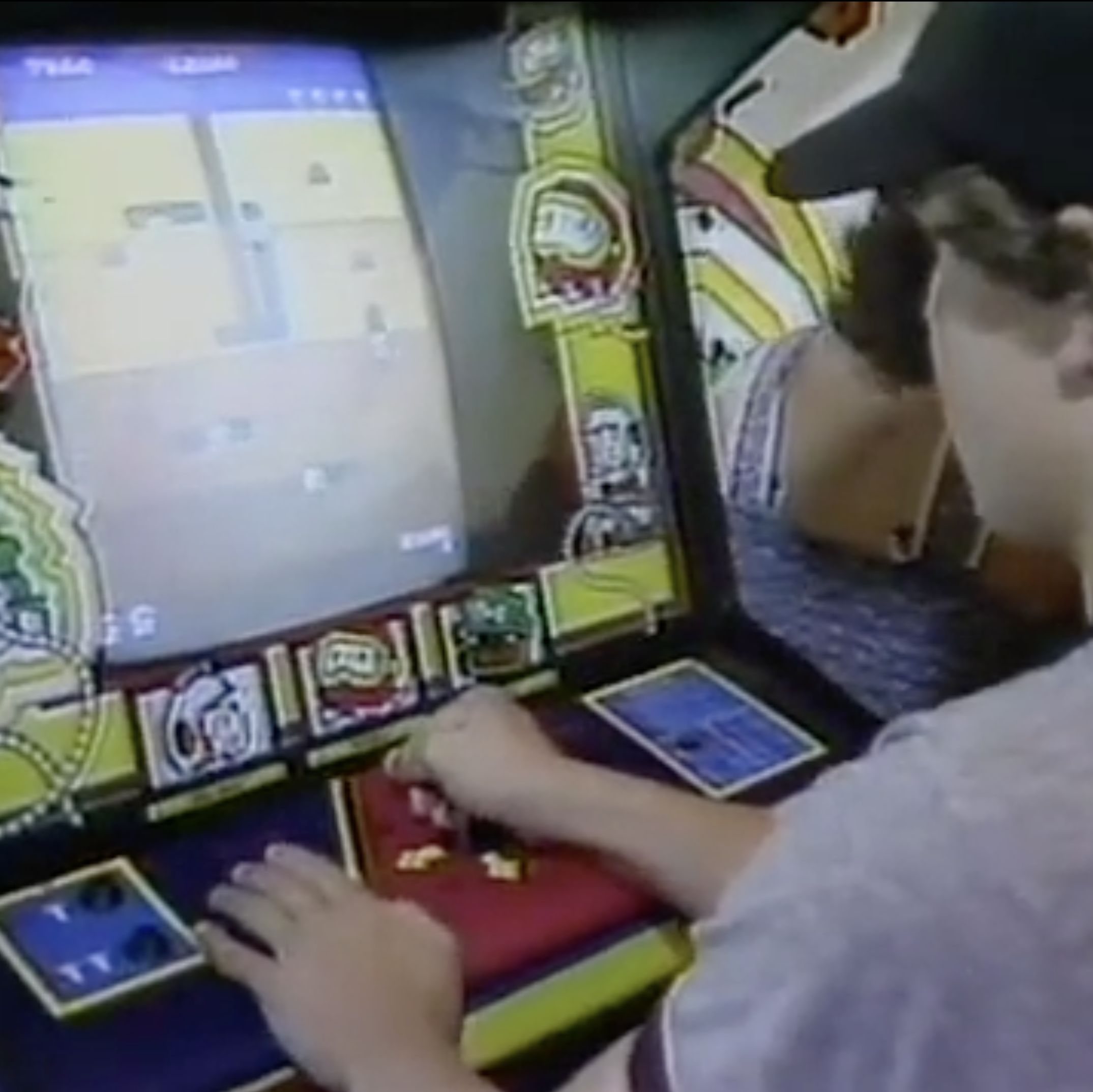 Video Game Arcades and Parental Concerns in New Jersey (1982)
 Video Games, Gambling, and Organized Crime (1991)
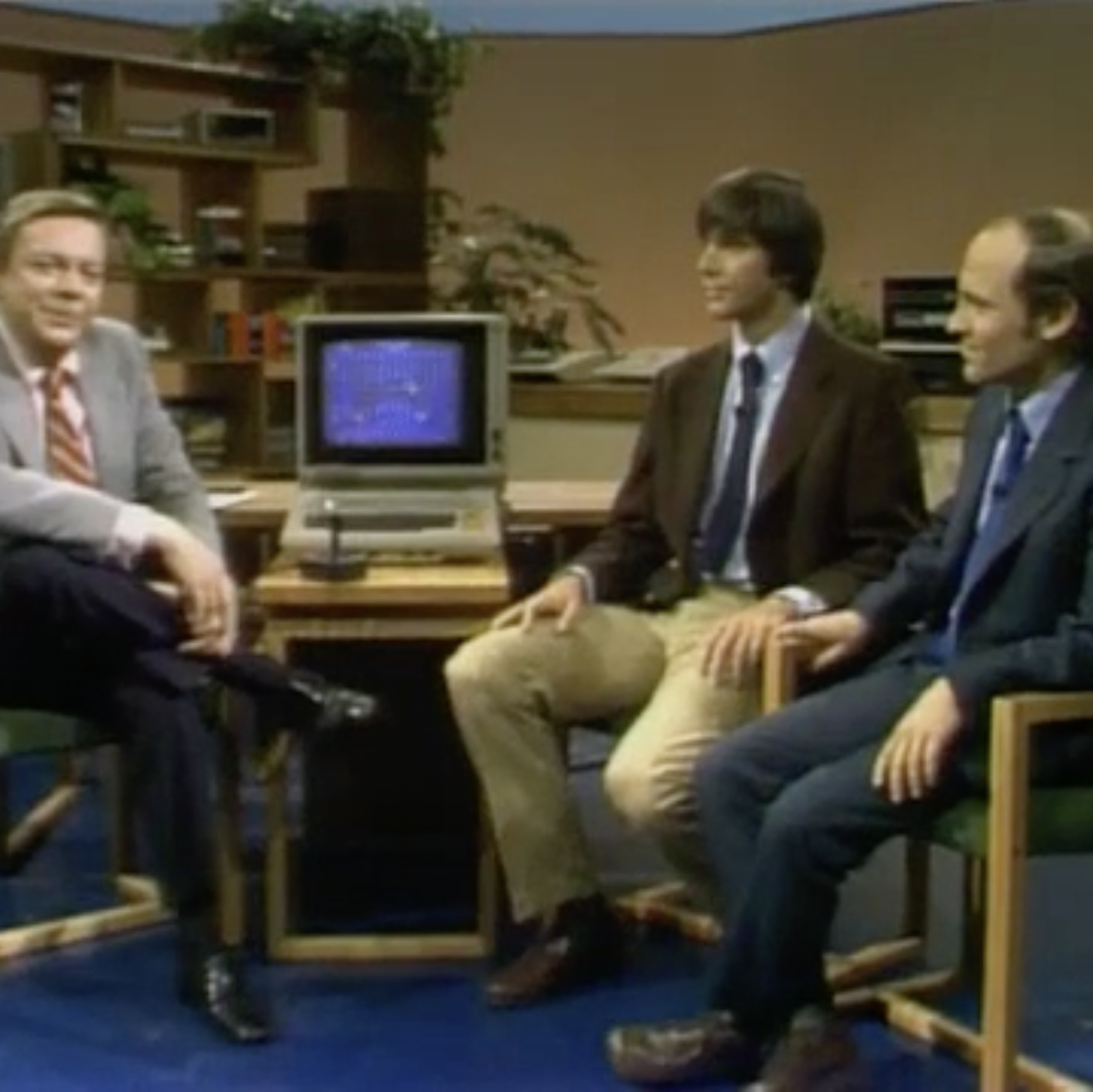 Game Designers Reflect on the New Medium (1983)
 Nintendo Becomes Mainstream (1988)