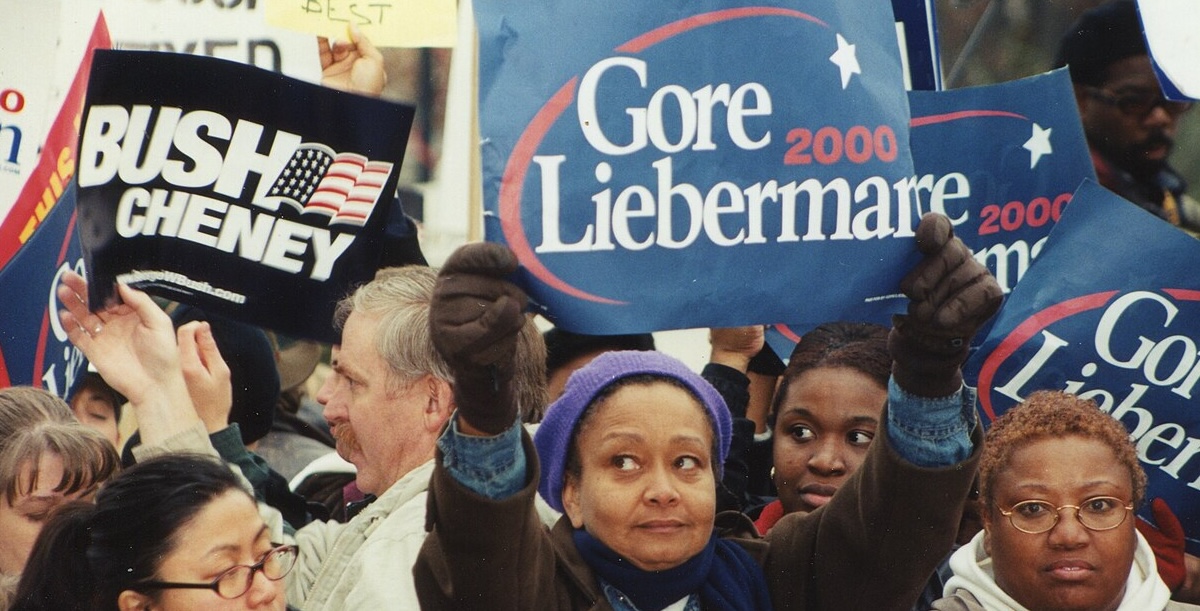
In the fall of 2000, Americans went to the voting booth to decide the next occupants of the White House. On the Democrat ticket was incumbent Vice President Al Gore, who had served in the role for two terms under Bill Clinton, and his running mate, Connecticut senator Joe Lieberman. The Republican ticket featured George W. Bush, eldest son of the 41st president, George H. W. Bush, and his running mate, former Defense Secretary Dick Cheney. On election night, the winner remained unclear as the returns in Florida were so close that the state’s electoral votes were undecided. After over a month of recounts and lawsuits challenging said recounts, Bush was ahead in Florida by a razor-thin margin of only a few hundred votes out of nearly 6 million cast state-wide. The issue was finally settled by the contentious U.S. Supreme Court decision Bush v. Gore, which resulted in Florida’s 25 electoral votes going to George W. Bush, thus ensuring Bush would be the next American president with a total 271 electoral votes to Gore’s 266. This marked the first time since 1888 that a candidate won without winning the popular vote (of all votes cast nationwide, Gore earned over 500,000 more than Bush), bringing renewed attention to the utility of the electoral college system amid the one of the closest U.S. presidential elections in history.
Bush v. Gore and the 2000 Presidential Election
- Created By
Dr. Lindsay Hogan, Associate Professor of Communication, Boston College
- Subjects
- Americans into the 21st Century: Politics
Introduction & Context
Sources
The inclusion of individuals, organizations, or viewpoints in these materials does not constitute an endorsement by the American Archive of Public Broadcasting. Archived materials are presented as part of the historical record.
Content Advisory: These archival materials may reference content that could be sensitive for some audiences. It is recommended that teachers and faculty preview these media sources to determine their appropriateness before sharing with students.
 Previewing the Polls: Absentee Ballots, Votes by Mail, and Exit Poll Data (2000)
 Election Night 2000: One of Political History’s Longest Nights (2000)
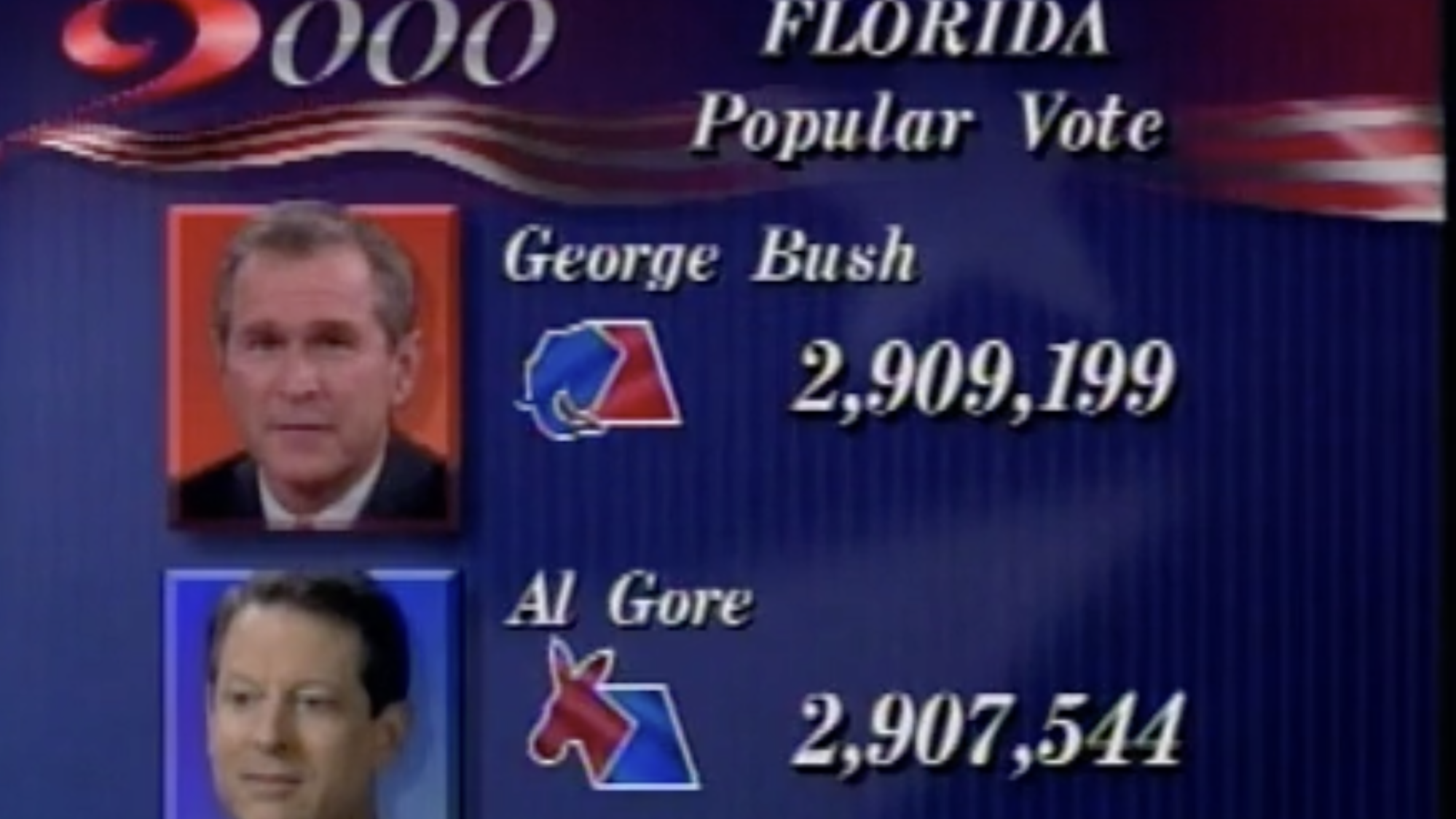 Assuring Faith and Confidence in the Electoral Process and the Rule of Law (2000)
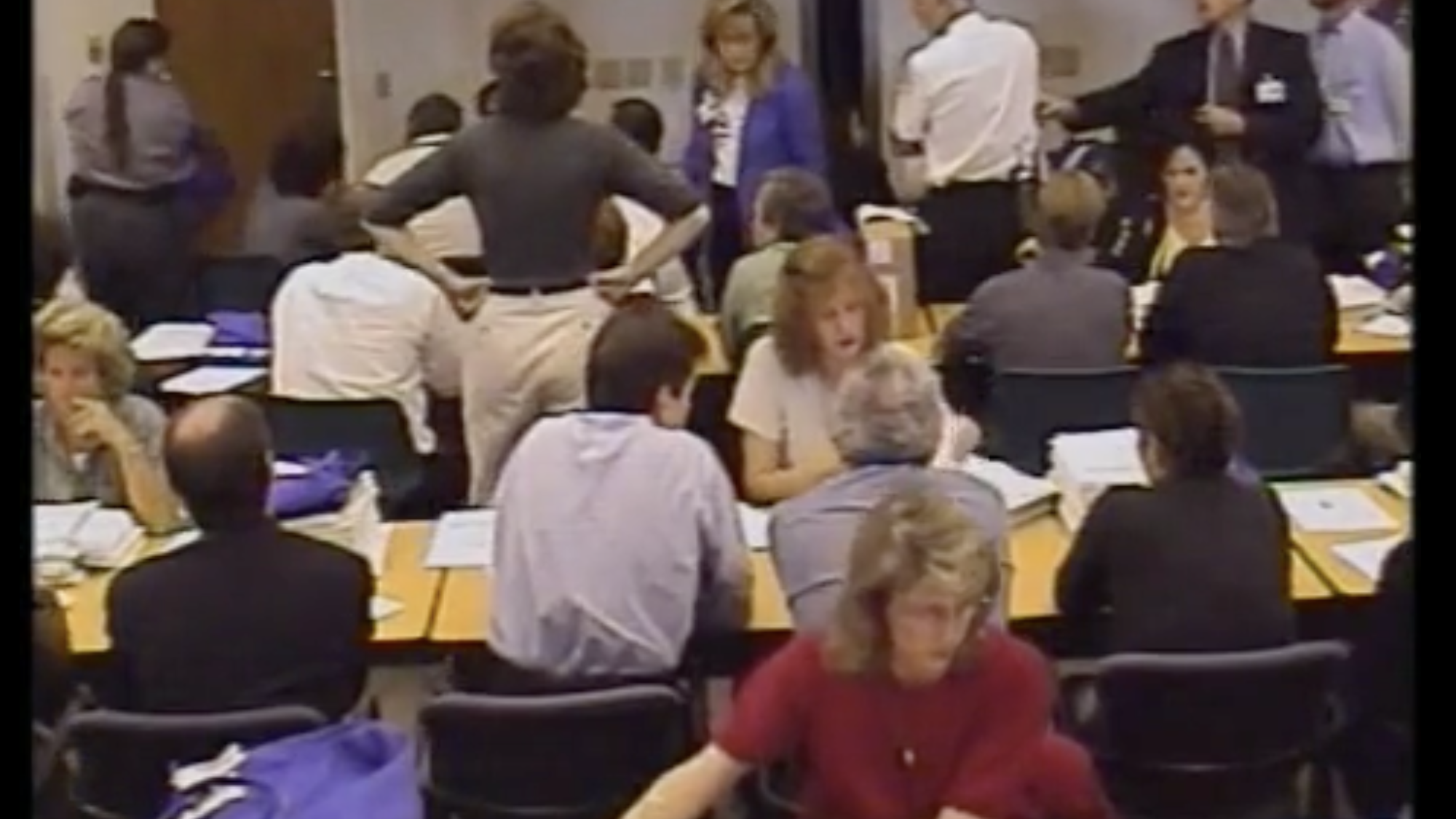 “History on Hold” as Election Officials Count and Recount Votes (2000)
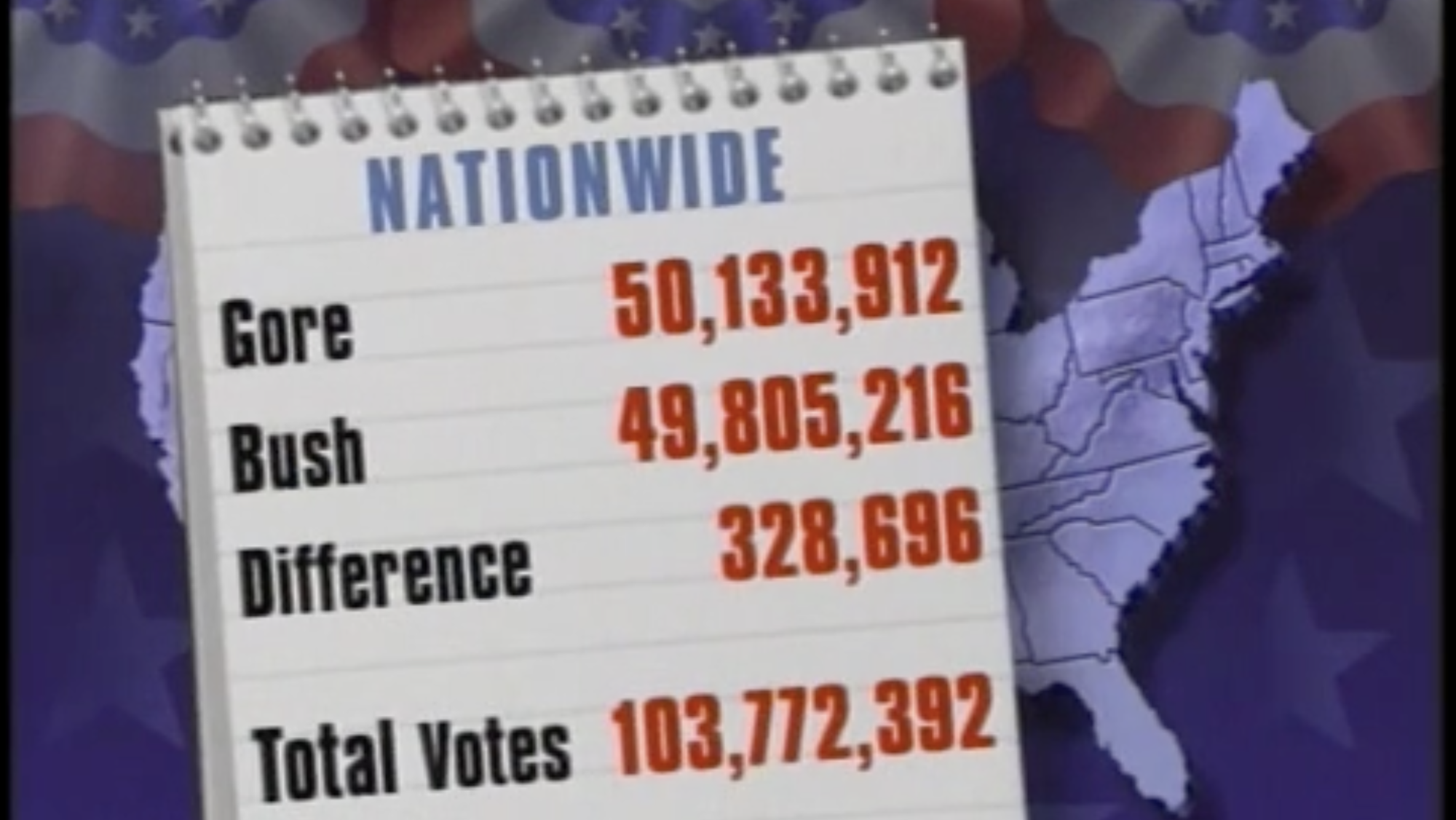 Margins of Error v. Margins of Victory: Voting Technologies and Election Math (2000)
 Formally Contesting Certified Election Results in Florida (2000)
 Debating the Role of the Electoral College (2000)
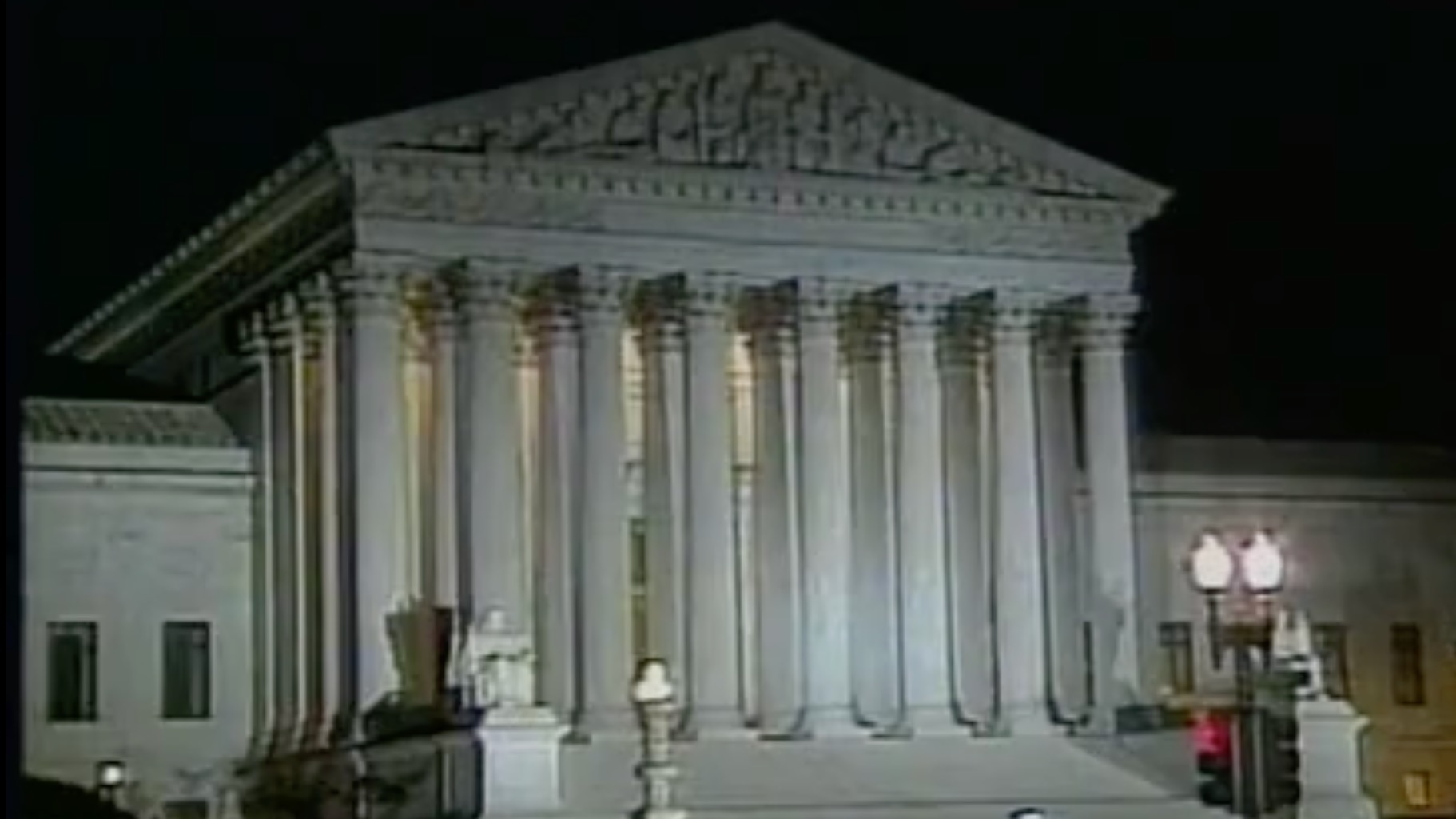 To Recount or Not to Recount: The U.S. Supreme Court Weighs In (2000)
 “A Journalistic Crime Against Accuracy?” Broadcast Reporter Regrets Election Night 2000 Coverage (2001)
Teaching Tips Download PDF
George W. Bush was only the fifth person in American history to win the presidency without winning the popular vote, due in part to a decision by the U.S. Supreme Court to overturn a Florida Supreme Court ruling allowing for further vote recounts. The outcome of the 2000 presidential election remains one of the most controversial moments in the last several decades and led to significant overhauls in the election processes nationwide. These sources—drawn from local and national news programs during the month-long period of uncertainty concerning the election’s final outcome—offer a unique opportunity for students and educators to understand, interrogate, and reflect on such a pivotal moment in American history.
Background Information
Before engaging with this resource set, students should be familiar with the following:
- The candidates and major issues at stake in the race, as well as broad historical contexts of American politics in the year 2000.
- The basic function of the electoral college in determining the president of the United States.
- The role of the U.S. Supreme Court in relation to state courts and other branches of the United States government.
Essential Question
How and why was the 2000 presidential election such a milestone in American history?
General Discussion Questions
- Why was Florida so important to the outcome of the 2000 presidential election?
- How did the news media’s election night coverage contribute to larger questions of uncertainty surrounding the winner?
- What role did the U.S. Supreme Court play in determining the outcome of the 2000 presidential election? How did the various opinions of the justices differ toward the Court’s role?
- What impact did this election have on future campaigns, elections, voting processes, and other aspects of American politics?
Classroom Activities
- You might only have time for a brief treatment of the 2000 presidential election and the Supreme Court’s ruling in * Gore* in a survey course. If so, you could identify one or two clips from this set to show in class followed by some discussion questions. For example: Show the below clip:
a. Ask students to analyze the rhetorical strategies in both Gore's and Bush’s addresses to the nation. How did each candidate attempt to toe the line between adversarial tones toward their opponent (and their respective political parties) alongside tones of unity toward the entire nation, its citizenry, and its institutions?
b. You could also ask students to reflect on what it must have been like to live through the uncertainty of those 36 days between the election and its resolution with George W. Bush as the victor. While five weeks may seem like a short blip of time from a broad historical perspective, actually living day-to-day for weeks on end with uncertainty about the next leader of the country and uncertainty about when or how that would be resolved was a complicated experience.
c. What are/were the norms and assumptions surrounding the transfer of power after an American presidential election? What considerations and/or preparations were upended for the candidates themselves in 2000? The outgoing incumbents? The political party operatives/strategists? World leaders and foreign governing bodies? Students could analyze the ways various individual and institutional interests overlapped and intersected at this critical juncture.
- Show the below clip and engage students in thinking critically about the function and utility of the Electoral College system.
a. What was the purpose of the system when it was first codified in Article II of the Constitution? How has the country, its electorate, and the nature of political campaigns changed since then? In what ways might these changes render the electoral college obsolete? In what ways might the electoral college still be useful?
b. Imagine ways that the system’s design may be manipulated and/or subverted at each stage in the process (naming electors; counting votes; certifying votes; tie-breaking votes by the vice president, speaker of the U.S. House of Representatives, etc.) and consider what backstops or buttresses may need to be added to prevent such possibilities.
c. Additionally, you could ask students to reflect on what it means for a candidate to become the president without a greater number of actual votes by Americans nationwide (i.e., winning the electoral votes but not the popular vote), especially in terms of enfranchisement and legitimacy.
- Show the below clip and ask students to consider the results from a mathematical perspective.
a. In such a close race, how do we account for margins of error? Mathematically speaking, are these results of such narrow margins indistinguishable from chance?
b. Discussion could then address the various technological interventions in the voting process, including the pros/cons of different ballot forms (punch ballots, hanging chads, etc.) and ways of counting them (by hand, by machine). This presents an opportunity to introduce students to one of the most significant ramifications of the 2000 election, the Help America Vote Act. Passed in 2002, the Act created new mandatory minimum standards in election administration and established the Election Assistance Commission to create voting system guidelines and implement the federal government’s first voting system certification program, among other mandates. This prompted heavy investment in updating voting equipment and voter identification procedures, and the development of new voting machines and tabulation software that increasingly relied on private, commercial companies like Dominion Voting Systems Corporation, Smartmatic USA Corporation, and VotRite. While these for-profit companies are registered with the U.S. Election Assistance Commission, the role of commercial entities in the democratic process of voting may present potential conflicts of interest. You could prompt students to not only consider potential benefits and limitations of such a system, but also do research on who owns the companies that make the ballots, own the voting machines, and/or calculate the data.
- Should you have more time to dive deeper, the sources in this set could serve as starting points for more in-depth class activities. For example:
a. To build on discussions relating to the “Debating the Role of the Electoral College” source, you could put together a role-playing group activity debating the function and utility of the electoral college. Divide the students into three groups:
- Group One researches and prepares arguments for the importance and necessary relevance of the electoral college and why it should remain.
- Group Two researches and prepares arguments against the Electoral College in America today and why we should abolish it.
- Group Three acts as jurors and/or respondents tasked with weighing arguments for each side and deciding the future of the Electoral College.
To further critical thinking on the issue, include a post-activity assignment allowing students to reflect on their experience, articulating key takeaways not only from research and deliberation but also from the dynamics of group work in general.
b. The ways that news outlets covered election night results remains one enduring issue highlighted by the 2000 election, raising questions about the efficacy of “horse-race” election and campaign reporting. The above sources offer opportunity to engage students in the role of journalism in informing the public in a timely yet responsible manner. Watch:
- Election Night 2000: One of Political History’s Longest Nights (2000)
- 'A Journalistic Crime Against Accuracy’? Broadcast Reporter Regrets Election Night 2000 Coverage (2001)
Role-play where students take on the role of reporters, editors, and fact-checkers in a live newsroom setting. Putting students into teams of competing news organizations, you could provide various poll data, statements from campaign officials, and even incomplete vote count totals to each team at different intervals and let them collaborate to make decisions about what, how, and when to report that information and make projections/conclusions about election outcomes. This activity allows students to consider first-hand the short-term pressures of using incomplete poll data/vote count returns to be first with a scoop versus the ethical implications of tempering coverage with patience and steady fact-checking and corroboration, and managing expectations of viewers/stakeholders.

.jpg)